Back to Main Site
Download Full Report
Back to Main Site
Download Full Report
How Foundations and Nonprofits Are Thinking About and Using Artificial Intelligence

The rapid spread of artificial intelligence (AI) is transforming the way we work. Business adoption of AI has surged from 55 percent in 2023 to nearly 80 percent in 2025 — and the nonprofit sector is seeing a similar increase in usage. With the fast pace of relatively unregulated AI innovation and growth, the Center for Effective Philanthropy (CEP) aimed to understand foundations’ and nonprofits’ understandings of, attitudes toward, and engagement with AI — and what role equity plays in these decisions. To our knowledge, this research is the most representative study comparing AI use and views in philanthropy and nonprofits to date.
Nonprofit leaders' survey responses
Foundation leaders' survey responses
Nonprofit and foundation leaders' interviews

Finding 1
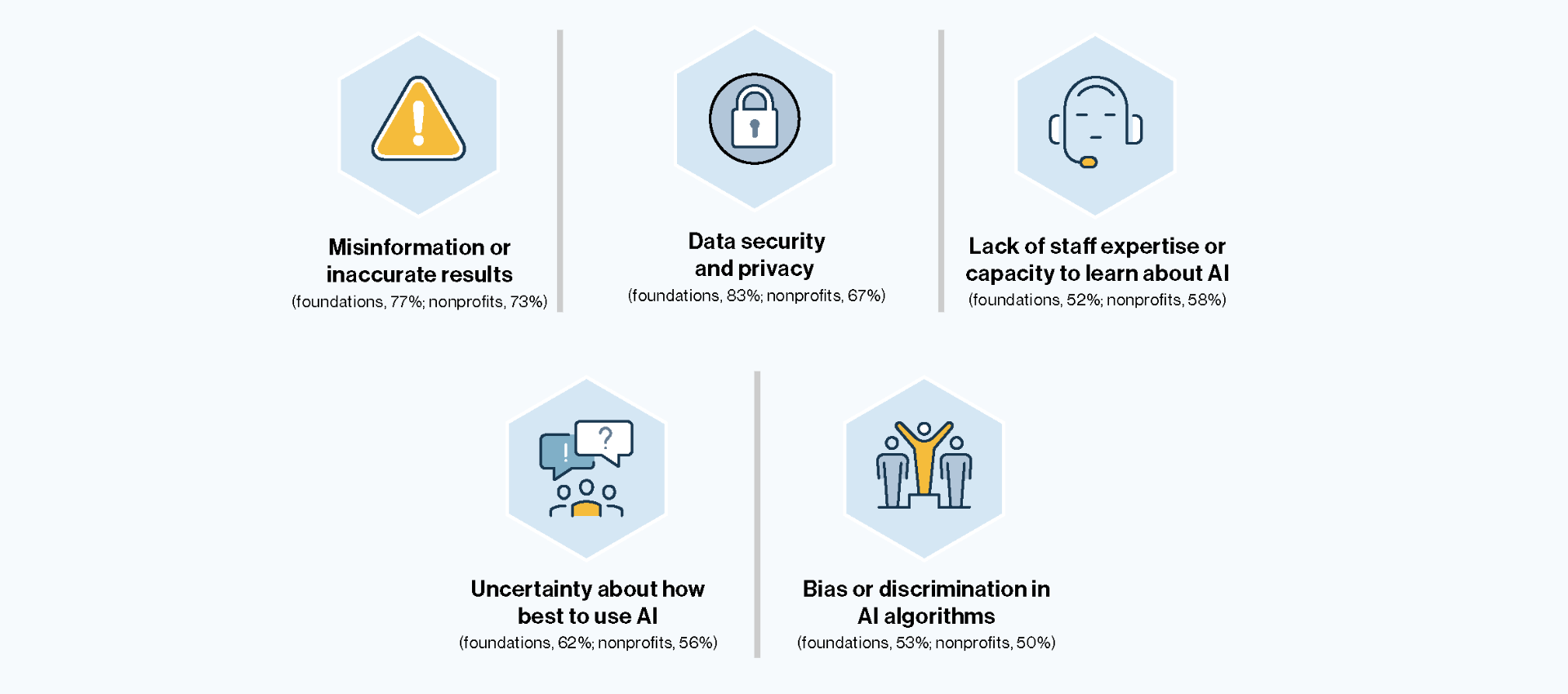
Most foundations and nonprofits use AI in their work but share a common set of concerns about the technology related to security, accuracy, staff expertise, and bias.


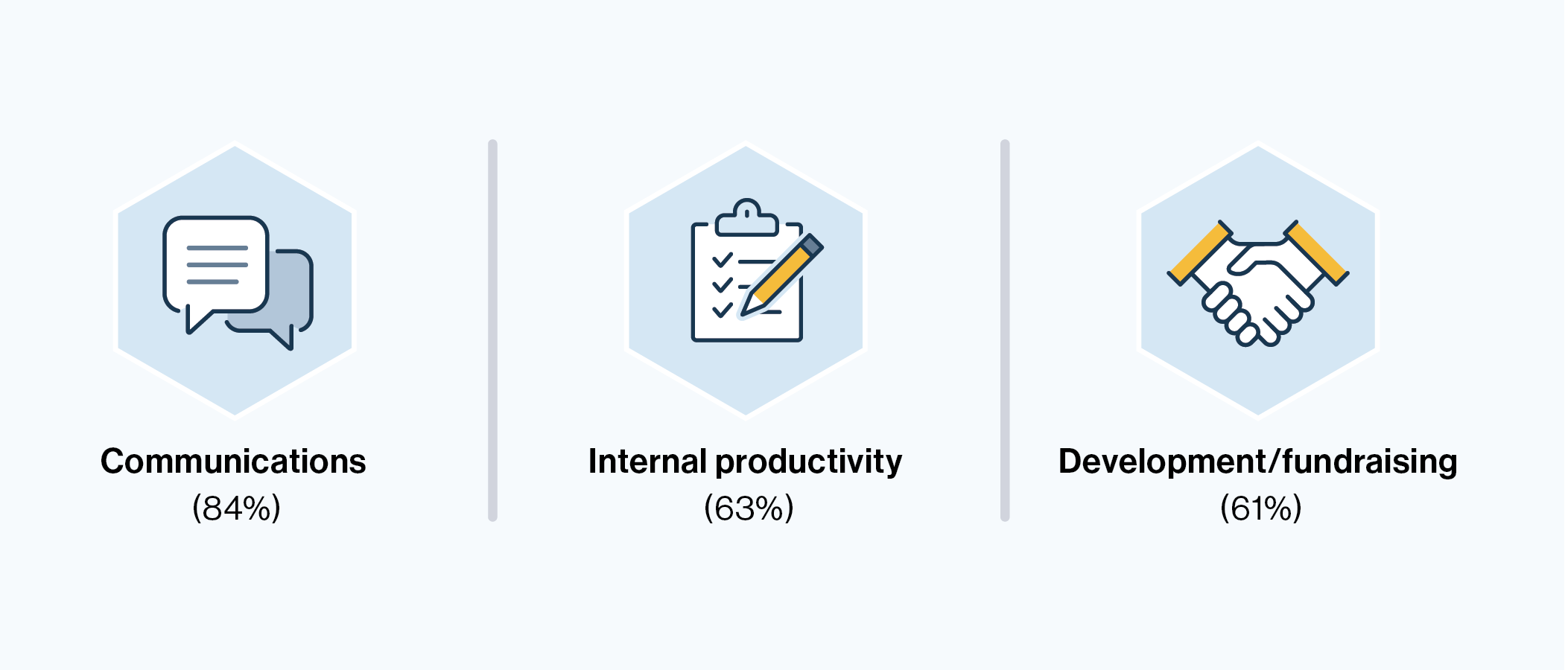
Foundations’ Most Common Uses for AI (N=129)
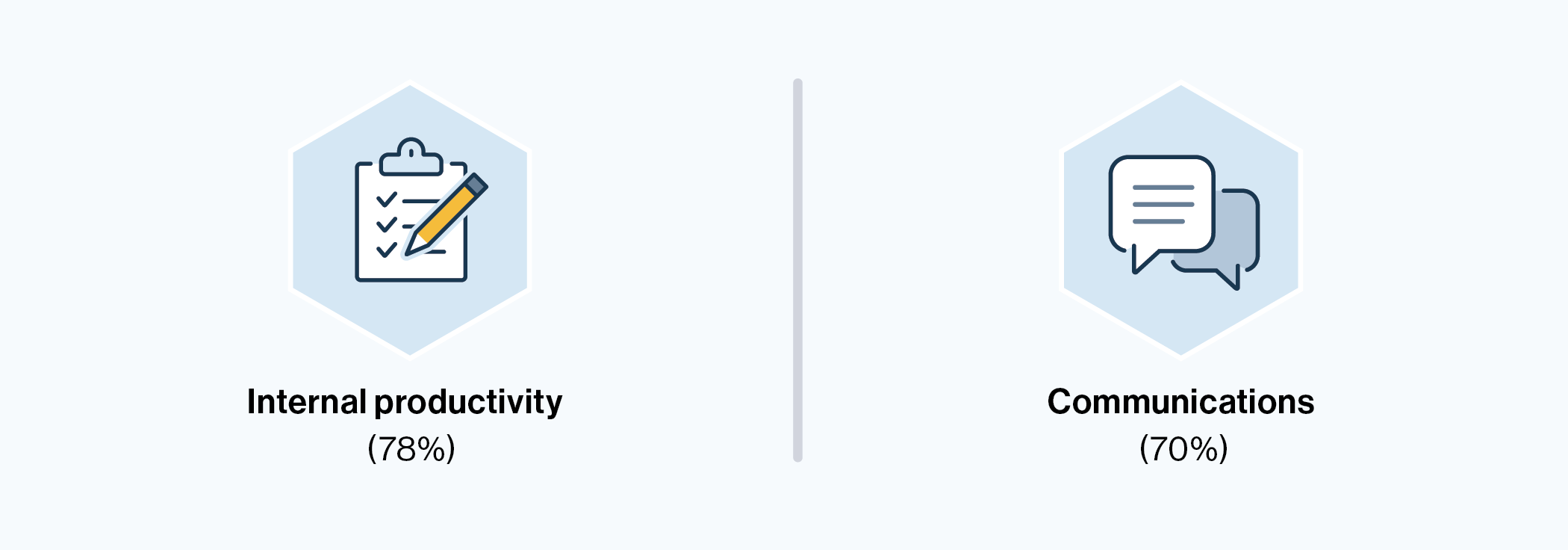
Nonprofits’ Most Common Uses for AI (N=279)
Most Common Concerns About AI Use Among Nonprofit and Foundation Leaders (N=212-446)
– Nonprofit Leader
Finding 2
Both foundation and nonprofit leaders believe foundation staff lack an understanding of nonprofits’ AI-related needs.

Percent of Foundations Reporting That Their Staff Has Limited to No Understanding of Grantees’ AI Attitudes/Capacities (N=199-201)

Proportion of Nonprofits’ Foundation Funders That Have Engaged Them in Conversations About AI (N=441)

Proportion of Foundation and Nonprofit Staff With a Solid Understanding of AI and Its Applications (N=214-448)

Note: Percentages may not add up to 100 due to rounding.
Finding 3
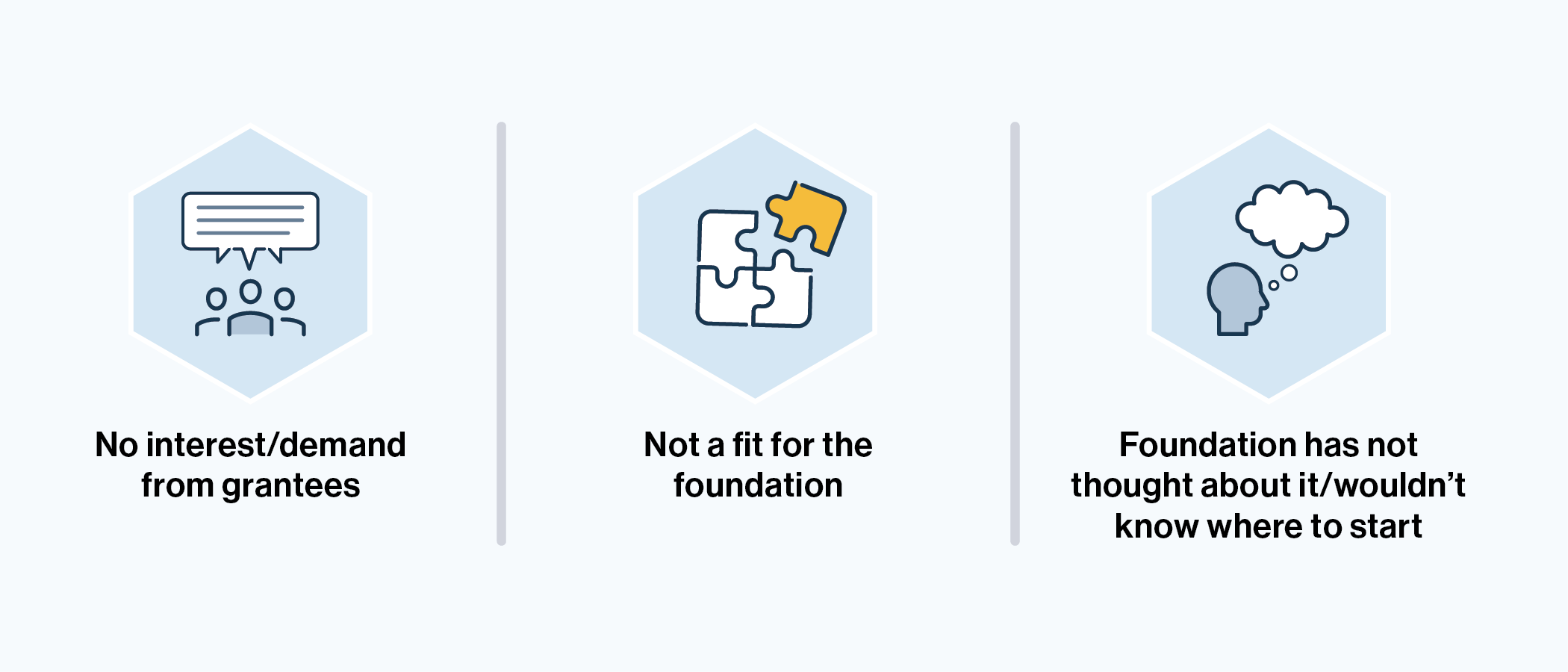
Few foundations provide funding or nonmonetary support for grantees’ use of AI.

Reasons Foundations Do Not Currently Provide AI Implementation Support to Their Grantees (N=129)
Foundations’ Planned Adjustments to Their Levels of AI Support for Grantees over the Next Three Years (N=211)

Note: Percentages do not add up to 100 due to rounding.
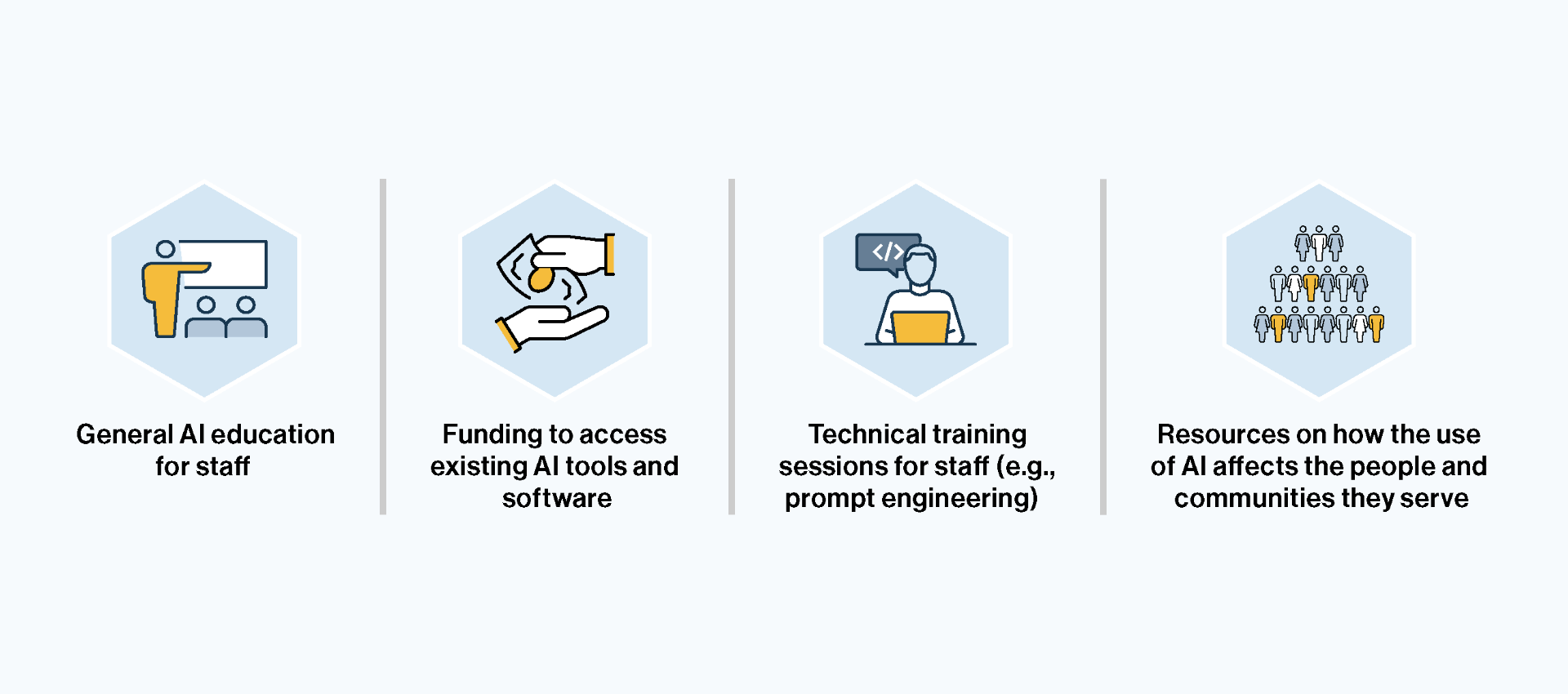
Most Common Types of AI Support Nonprofits Would Like from Their Foundation Funders (N=439)
Finding 4
Much opportunity remains for both foundations and nonprofits to take the ethical development, deployment, and use of AI into consideration, particularly for historically marginalized communities.

Percent of Nonprofits That Engage in Internal Conversations about Equitable AI (N=444)

Percent of Nonprofits Participating in Activities to Advance Equitable AI (N=437)

Note: Percentages add up to more than 100 because respondents could select all that apply.
– Nonprofit Leader
Nonprofits and foundations are likely to continue taking a wide range of stances on AI use and funding. Whether organizations choose to adopt or opt out, to critique or promote — or anywhere in between — we hope that this research will prompt a thoughtful and proactive approach to the arrival of AI in the philanthropic and nonprofit sectors.
If this report has been helpful to you, please consider supporting CEP’s research. Reach out to us for more information. Thank you.